Jamii Dental Clinic
Tooth Extraction
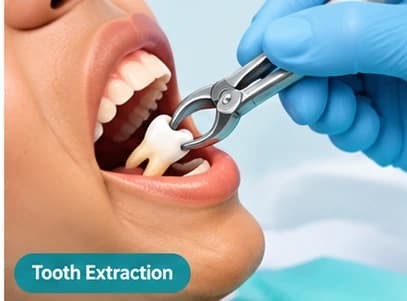
A tooth extraction is the removal of a tooth when it is badly damaged, severely decayed, or causing problems that are best addressed by removal rather than saving the tooth.
About this treatment
This treatment is typically considered when a tooth is causing ongoing pain, infection, or crowding, or when it cannot be restored in a way that will protect the surrounding teeth and oral health.
What it is
This treatment is typically considered when a tooth is causing ongoing pain, infection, or crowding, or when it cannot be restored in a way that will protect the surrounding teeth and oral health.
Why it may be recommended
- A tooth is too damaged or decayed to restore effectively.
- There is ongoing pain, infection, or pressure that needs assessment.
- A tooth is causing crowding or other bite-related concerns that a dentist is reviewing.
What problem it addresses
If you have severe tooth pain, swelling, a loose tooth, or a broken tooth that is causing significant discomfort, speak with a dentist as soon as possible.
What to expect
The dentist will examine the tooth and explain the reason for extraction, along with the general approach to care. The appointment is focused on assessment and planning, rather than giving patients instructions to manage the treatment themselves.
After your treatment
After the tooth is removed, the dentist will explain the care plan and any follow-up that may be advised. Patients should follow the instructions given by their dentist and attend any review visits.
When to see a dentist
If you have severe tooth pain, swelling, a loose tooth, or a broken tooth that is causing significant discomfort, speak with a dentist as soon as possible.
Related services
Frequently asked questions
When is tooth extraction needed?
It may be recommended when a tooth is too damaged to restore, badly infected, or causing ongoing discomfort or crowding that is best addressed by removal.
What should I expect after treatment?
The dentist will explain the general care plan and recommended follow-up, and patients are encouraged to follow those instructions closely.
Ready to speak with the team?
We can talk through your concerns and explain the right next step.